

G ★★★★★
4.9 stars from 350+ Google reviews
Hospital-trained residency experience with complex cases
Second opinions on full-arch and implant plans from other offices


Monthly payment plans through CareCredit and Alphaeon
All-on-4 Holds a Full Arch of Teeth on Four Implants
All-on-4 replaces every tooth in the upper or lower jaw with one fixed arch attached to four dental implants. Two implants go in near the front of the jaw. The two at the back are tilted, which lets them reach denser bone and can reduce the need for bone grafting. The arch is fastened to the implants, so it stays in when you eat, talk, and sleep.
It is the full-arch option among our dental implant treatments, meant for patients who are losing or have lost most of the teeth in a jaw. At Drs. Chin & Pharar Dentistry in Summerlin, Dr. Robert Chin and Dr. Jessica Pharar take on full-arch cases that need extra planning, including patients with medical conditions, bone loss, or a failed implant, and they welcome patients who want a second opinion before surgery.

Per arch, upper jaw, lower jaw, or both
Fastened in place, not taken out at night
Tilted back implants use the bone you have
Bring the full-arch plan you were given
All-on-4 Is for People Losing or Missing Most of Their Teeth
Most patients come to us from one of these four situations.

Dentures That Slip or Hurt
If your denture moves when you eat or talk, a fixed arch on implants stays put and needs no adhesive.

Many Teeth Failing at Once
When decay, gum disease, or old dental work has left most teeth in a jaw beyond repair, one plan replaces the whole arch instead of tooth by tooth.

Told You Do Not Have Enough Bone
Tilting the back implants makes use of the bone that is left, so some patients turned away for regular implants are still candidates.

Rebuilding Your Whole Smile
All-on-4 can replace the upper teeth, the lower teeth, or both, as part of a larger full mouth restoration.
How All-on-4 Compares to Dentures and Separate Implants
All three can replace a full arch. What holds the teeth in place is different, and that changes how stable they feel when you chew.
Rests on the gums
Lowest. Can slip, and needs refitting as the jawbone shrinks
Patients who want a non-surgical, removable option
More implants spread across the jaw
High. Each section is anchored on its own implants
Patients with enough bone in several areas of the jaw
All-on-4
One arch on four implants
High. Fastened to the implants, so it does not move
Most or all teeth missing in a jaw, including some cases with bone loss
All-on-4 Takes Several Months From Consultation to Final Teeth
Most of that time is healing, while the jawbone bonds to the implants. That bonding can take about three to nine months, according to the Cleveland Clinic.
Exam and X-Rays
We review your health history, check your gums and bite, and use digital X-rays to see how much bone you have.
Your Treatment Plan
You learn whether All-on-4 fits, which teeth need to come out, whether one or both jaws are treated, and what each step costs.
Implant Placement
Failing teeth are removed and the four implants are placed under local anesthesia. Sedation is available if you need help relaxing.
Your Permanent Arch
Once the implants have bonded to the bone, your permanent arch is attached and adjusted to your bite.
A Few Health Factors Decide Whether All-on-4 Is Safe for You
Your dentist reviews these at the consultation, and most of them can be managed before surgery.
Are your gums healthy?
Active gum disease needs to be treated before implants are placed, because infection around an implant can cause it to fail.
Do you smoke or vape?
Smoking slows healing and raises the risk of implant failure. Stopping before and after surgery gives the implants a better chance to bond.
Do you have diabetes or another condition?
Many medical conditions do not rule out All-on-4, but they need to be well controlled. We review your health history and coordinate with your physicians when needed.
Do you take medications that affect bone?
Some medications, including certain drugs for osteoporosis and cancer, can affect how the jaw heals. Bring a full medication list so we can plan safely.
Eating and Cleaning With an All-on-4 Arch
The first weeks are about protecting the implants while they heal. After that, the arch needs daily cleaning much like natural teeth.
Soft Foods While You Heal
Expect soreness and swelling for a few days after surgery. Stick to soft foods while the implants bond to the bone, and follow your dentist’s instructions. Our guide to what to avoid after implant surgery covers the basics.
Daily Cleaning and Checkups
Brush the arch twice a day and clean underneath it where it meets the gums, often with a water flosser or special floss. Regular checkups let us look at the implants and the gums around them. The arch can wear over time and may need repair or replacement.
Get a Second Opinion Before Full-Arch Surgery
Removing every tooth in a jaw cannot be undone, so it is reasonable to have another dentist review the plan first. That matters most if you were told more teeth need to come out than you expected, that you do not have enough bone, or that a previous implant failed.

What to bring to a second-opinion visit
- The full-arch plan you were given. Including which teeth would be removed and the estimate.
- Recent X-rays or scans. Ask your previous office to send them so we can compare.
- Your medication list and health history. Some medications and conditions affect healing.
- Details about any failed implant. When it was placed, when problems started, and what was done.
Read more about getting a second opinion on full mouth reconstruction and why dental implants fail.
Meet Your Las Vegas All-on-4 Dentists

Dr. Robert Chin, DMD
Dr. Chin completed a General Practice Residency at the University of Rochester Medical Center, Eastman Institute for Oral Health, in a hospital setting where he treated patients with serious medical conditions.
GPR, 2014 to 2015
Eastman Institute for Oral Health
Hospital setting
Level 1 trauma center
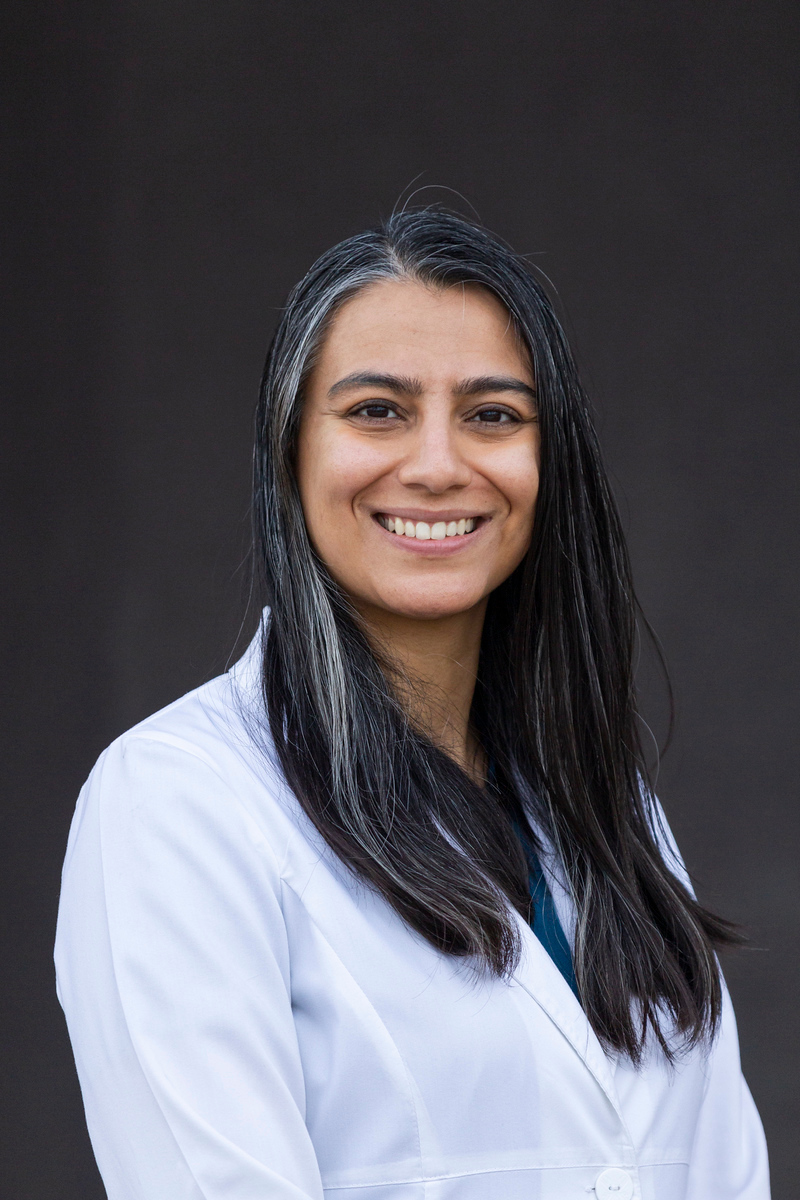
Dr. Jessica Pharar, DMD
Dr. Pharar completed an Advanced Education in General Dentistry program at Texas A&M Baylor College of Dentistry, with training in medically complex cases, and coordinates closely with physicians.
AEGD, 2014 to 2015
Texas A&M Baylor College of Dentistry
Founder
The Pharar Foundation
All-on-4 Cost Depends on Your Jaws, Your Bone, and Your Final Arch
Your dentist explains your plan and fees at your consultation, before anything is scheduled. These are the factors that change the total.
One or both jaws
Treating the upper and lower jaw is two arches.
Extractions
How many teeth need to come out first.
Bone grafting
Whether any grafting is needed before placement.
Your final arch
The design and material of the permanent teeth.
Insurance
Dental plans often pay only part of full-arch treatment, so we check your benefits, ask for a co-pay at the time of service, and file your claim for you. Insurers we accept include:


Teachers Health TrustUnited ConcordiaDiversified Dental ServicesAssurantHumana
Financing and Savings Plan
Monthly payment plans through CareCredit and Alphaeon Credit, plus our in-office dental savings plan for patients without dental insurance.
All-on-4 at Our Village Center Circle Office
Address: 1781 Village Center Circle, Suite 110, Las Vegas, NV 89134
Phone: (702) 445-7075
Hours: Mon, Tue, Thu, Fri 9 am to 5 pm · Wed by appointment · Closed weekends
Patients visit us from
Frequently Asked Questions About All-on-4 in Las Vegas, NV
Does All-on-4 surgery hurt?
The jaw is numbed with local anesthesia during surgery, so most patients feel pressure rather than sharp pain. Soreness and swelling for several days afterward is normal and usually managed with pain medication. Sedation is available in our office for patients who need help relaxing.
Can I get All-on-4 if I have bone loss?
Often, yes. The two back implants are tilted to reach denser bone, which can avoid a bone graft for some patients who were told they did not have enough bone for regular implants. Your dentist will confirm after reviewing your X-rays.
How long does All-on-4 last?
The implants are meant to be a long-term replacement when they are cared for and checked regularly. The arch attached to them can wear or chip over time and may need repair or replacement. Smoking and skipped checkups raise the risk of problems.
Can All-on-4 be done on both jaws?
Yes. It can replace the upper teeth, the lower teeth, or both. Your dentist will explain whether both jaws are best treated together or one at a time.
What happens to the teeth I still have?
If All-on-4 is the right plan, the remaining teeth in that jaw are usually removed when the implants are placed, because the arch replaces every tooth. If some teeth can be saved, your dentist will discuss other options, such as separate implants or a partial denture.
Does insurance cover All-on-4?
Coverage depends on your plan, and many dental plans pay only part of full-arch treatment. Insurers we accept include Delta Dental, MetLife, Cigna, and Anthem Blue Cross Blue Shield, and we file your claim for you. Financing is available through CareCredit and Alphaeon Credit.
Can you give me a second opinion on an All-on-4 plan?
Yes. We welcome patients who want a second opinion on a full-arch or implant plan from another office. Bring the plan, recent X-rays or scans, and your health history.
Read Before Your All-on-4 Consultation
These articles from our team answer the questions we hear most often about full-arch treatment.
Schedule an All-on-4 Consultation in Las Vegas
Dr. Chin and Dr. Pharar bring hospital and residency training in medically complex care to every full-arch plan, and patients rate the practice 4.9 out of 5 across more than 350 Google reviews.
Call (702) 445-7075 to schedule a consultation or a second opinion, or contact us online.
Request a consultation online
Prefer to write it down? Use our online appointment form to send a request and pick a preferred date.