

When most people think about fixing their teeth, they picture one procedure, maybe a crown here, a filling there. But if the damage in your mouth is widespread, a patchwork approach can leave you cycling through appointments for years without ever reaching stable, lasting results. Full mouth restoration takes a different approach entirely. Rather than treating problems one by one, it rebuilds the health, function, and appearance of your entire mouth through a coordinated sequence of procedures tailored specifically to you.
At Drs. Chin & Pharar Dentistry, this kind of comprehensive care is exactly what the practice was built for. Dr. Robert Chin and Dr. Jessica Pharar came together through a shared commitment to doing dentistry the right way, and they treat medically complex and challenging cases that other offices routinely turn away. Before you move forward with a full-mouth restoration, here is what you genuinely need to understand about the process, what to expect, and why the right team matters more than most patients realize.
Who Actually Needs Full Mouth Restoration?
Full mouth restoration is not just about improving the appearance of your smile. It is designed to address serious dental problems that affect how your teeth work every day. You may be a candidate if you have widespread tooth decay, significant wear from years of grinding, bone loss caused by gum disease, or multiple missing teeth that have changed the way your bite fits together. Ongoing jaw pain or TMJ-related issues can also be signs that your bite has been affected and may benefit from a more comprehensive treatment approach.
Many patients do not realize how connected these problems can become. When a tooth is missing, nearby teeth often take on extra pressure. Over time, that can lead to more wear, bite changes, and added strain on the jaw joints. These issues usually do not resolve on their own. Without the right treatment, they can continue to build on each other. If another dentist has told you that your case is too complex or that your options are limited, a second opinion may help you find a clearer path forward than you expected.
What Conditions Are Typically Addressed
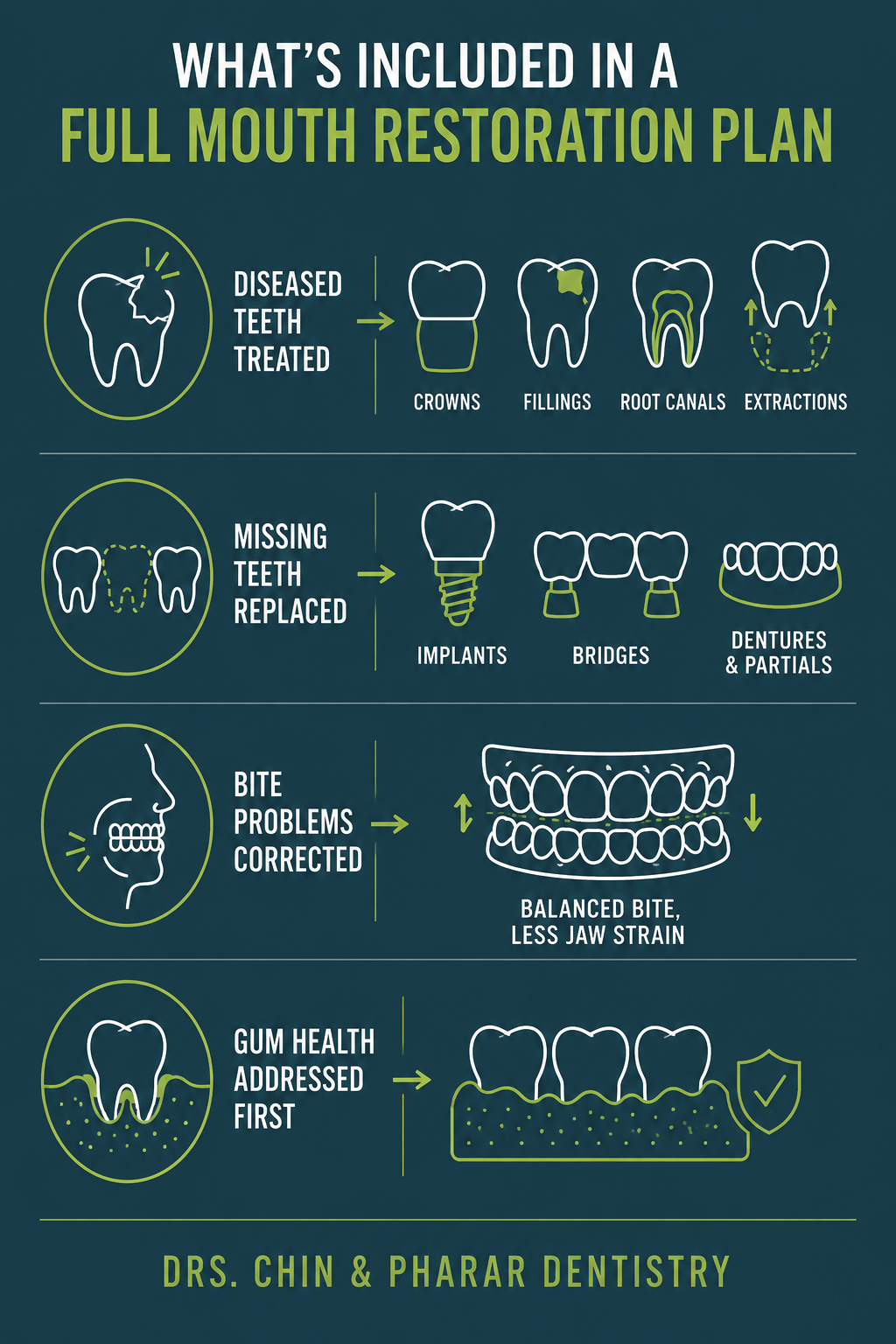
A full mouth restoration plan is built around your specific clinical picture, but it commonly involves some combination of the following:
- Tooth decay and infection: Crowns, fillings, root canals, or extractions when teeth cannot be preserved
- Tooth loss: Dental implants, bridges, or dentures and partials to restore function and prevent bone loss
- Bite problems: Restoring proper occlusion to reduce strain on your jaw and remaining teeth
- Gum disease: Treating the underlying infection before restorative work begins
According to research published by the National Institutes of Health, full-mouth rehabilitation requires an interdisciplinary approach, meaning the most successful outcomes come from dental professionals coordinating across specialties rather than treating each issue in isolation. Each treatment builds on the one before it, which is why sequencing matters and why your care plan must be thoughtfully designed from the start.
What the Treatment Timeline Looks Like
Before any procedures begin, you will go through a thorough diagnostic evaluation. This typically includes X-rays, photographs, bite analysis, and a full review of your dental and medical history. From there, treatment moves in stages. Any active infections or gum disease are resolved first, since restorative work placed over an unhealthy foundation will not last. Extractions and bone grafting, if needed, come next, followed by implant placement with a healing period before final restorations are attached.
For patients who feel anxious about the extent of the work involved, sedation dentistry is available to make longer appointments far more comfortable. The practice also uses advanced office technology to map out treatment accurately from the beginning, because the diagnostic phase is where mistakes get prevented, not corrected later.
Understanding Cost and Coverage
Full-mouth restoration is a significant investment, and transparency about costs matters. The total depends on which procedures are included in your plan, the number of teeth involved, and whether surgical steps like implants or bone grafting are required. Dental insurance typically covers medically necessary components, such as extractions, certain restorations, and treatment for gum disease, though cosmetic elements are generally excluded.
The practice works with multiple insurance providers, including Delta Dental, MetLife, CIGNA, Anthem Blue Cross/Blue Shield, and others, to help patients understand and maximize their benefits. Financing options are also available, because the cost of delaying comprehensive care almost always exceeds the cost of addressing it.
Frequently Asked Questions About Full Mouth Restoration
Who is a candidate for full mouth restoration?
Candidates often have widespread tooth decay, significant wear from grinding, bone loss from gum disease, multiple missing teeth affecting the bite, or ongoing jaw pain related to TMJ issues.
What conditions does full mouth restoration typically address?
A plan may combine treatment for tooth decay and infection, tooth loss, bite problems, and gum disease, tailored to your specific clinical picture.
Why does treatment sequencing matter?
Each treatment builds on the one before it. Active infections and gum disease are resolved first, then extractions or grafting if needed, followed by implant placement and final restorations.
Does dental insurance cover full mouth restoration?
Insurance typically covers medically necessary components like extractions, certain restorations, and gum disease treatment, though purely cosmetic elements are generally excluded.
What if another dentist told me my case was too complex?
A second opinion from a practice experienced with medically complex cases may reveal options you weren’t told about, so it’s worth a fresh evaluation before ruling anything out.
Choose Drs. Chin & Pharar Dentistry for Your Full Mouth Restoration
Full mouth restoration requires clinical depth, careful planning, and the kind of experience that comes from treating cases others consider complicated. Dr. Jessica Pharar completed an Advanced Education in General Dentistry Program from Texas A&M, Baylor College of Dentistry, and her time at the Sammons Cancer Center shaped how she approaches medically complex patients. Dr. Robert Chin completed a General Practice Residency at the University of Rochester Medical Center, Eastman Institute for Oral Health, training that informs the precision he brings to every treatment plan. Together, both doctors take a hospital-style, collaborative approach. No matter which provider you see, the other is fully informed about your case.
If you have been putting off addressing serious dental problems because the process felt overwhelming, starting with a consultation is the right first step. The team at Drs. Chin & Pharar Dentistry will review your full clinical picture, outline your options honestly, and build a plan designed to last. Contact us today to schedule your appointment.