
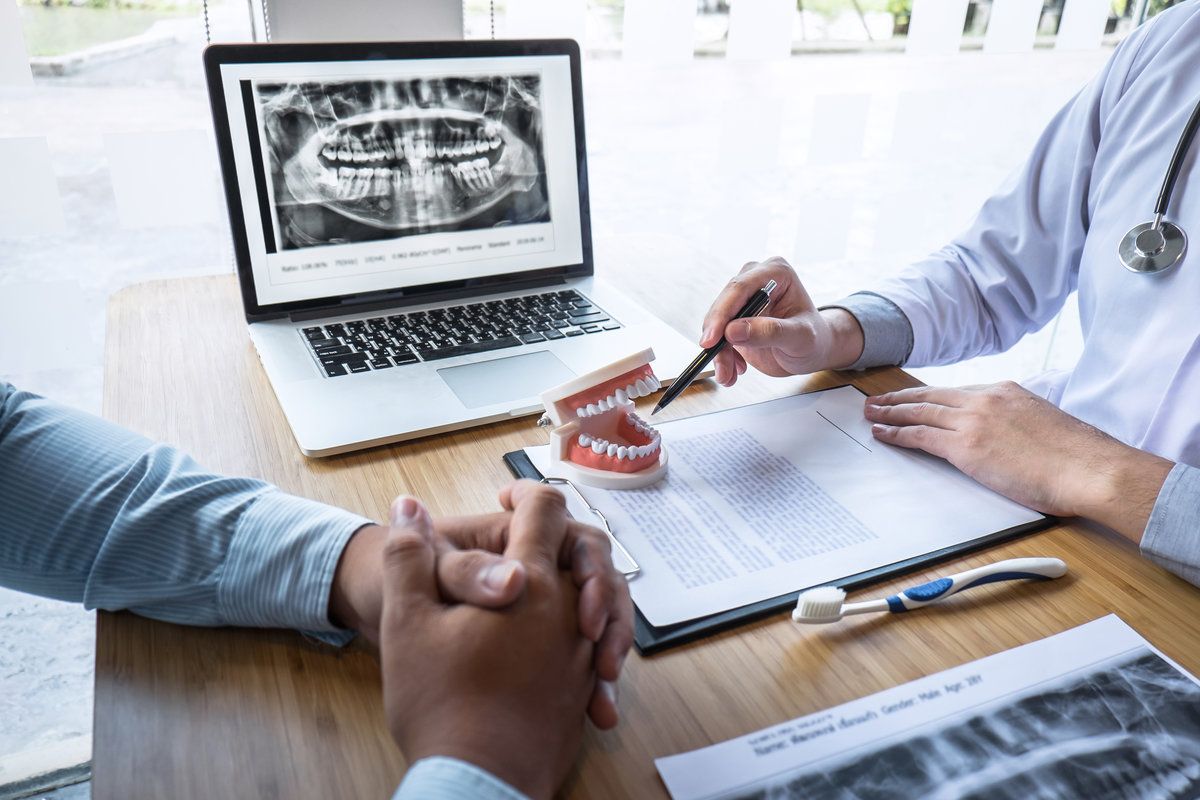
Many patients believe that once their jawbone has thinned past a certain point, dental implants are simply out of reach. That fear often keeps people from asking one of the biggest questions on their mind, which is how much bone loss is actually too severe. The honest answer is that there is rarely a fixed cutoff, since modern bone grafting techniques and specialized implant designs can restore support in cases that once seemed hopeless.
At Drs. Chin & Pharar Dentistry, we evaluate every patient’s bone structure individually rather than relying on a one-size-fits-all standard. Dr. Robert Chin and Dr. Jessica Pharar built their dental implants practice around advanced case management for complex situations, and they bring that same careful approach to every conversation about bone loss.
What Counts as Severe Bone Loss?
Dentists measure bone loss by looking at both the height and the width of the jaw at the site where a tooth is missing. A CT scan or three-dimensional imaging shows exactly how much solid bone remains and whether it can support the pressure an implant needs to withstand while chewing. Mild bone loss usually still leaves enough width and height for a standard implant, while moderate loss may call for a shorter or narrower implant design. Severe bone loss means very little supportive structure remains, but even then, options like grafting or specialized implant placement often make treatment possible.
A recent systematic review and meta-analysis published through the National Institutes of Health found that reduced bone density alone did not significantly affect implant survival or failure rates, which reinforces why blanket assumptions about “too much bone loss” rarely hold up once a dentist looks closely at your case. What matters more is a careful, individualized evaluation of the bone that remains and how it responds to treatment, not a single number on a chart.
Signs You May Be Losing Jawbone
Bone loss often develops quietly, so many people do not notice it until a dentist points it out during an exam. Watching for a few warning signs can help you catch changes early, before they progress into something more difficult to treat.
- Loose or shifting teeth: Neighboring teeth may begin to drift once the bone that once supported a missing tooth starts to shrink.
- Sunken facial appearance: A collapsed look around the mouth and cheeks often develops as the jaw loses its natural volume.
- Difficulty wearing dentures: Dentures that once fit well can start to feel loose as the underlying ridge changes shape.
- Jaw or bite discomfort: Changes in how your teeth meet can create new pressure points and general jaw fatigue.
If you notice any of these changes, it is worth having your jawbone evaluated sooner rather than later, since waiting can allow further shrinkage that limits your options down the road.
How We Rebuild Support With Bone Grafting and All-on-4 Options
When bone loss has progressed, we do not automatically rule out implants. Bone grafting adds volume to a thin or shrunken area of the jaw, giving new bone time to grow and create a stable foundation before an implant is placed. For patients who have lost most or all of their teeth in an arch, our All-on-4 dental implants option uses strategically angled implants that anchor into the strongest remaining bone, often avoiding the need for extensive grafting altogether.
We also rely on advanced imaging and planning technology in our office to map out exactly where bone remains and how much support an implant site can safely handle. That level of detail lets us build a treatment plan around your actual anatomy instead of guessing based on general averages.
Why a Second Opinion Matters Before Ruling Out Implants
Patients are sometimes told by another provider that their bone loss is too advanced for implants, only to learn that additional options existed once they sought further evaluation. Surgical decisions carry real weight, and we believe every patient deserves a thorough second look before accepting that implants are off the table.
We welcome patients seeking a second opinion on implant candidacy, especially those with complex medical histories or advanced bone loss who were previously told no. Reviewing your imaging and history with fresh eyes sometimes reveals treatment paths that were not fully explored the first time around, whether that means a grafting procedure, an alternative implant approach, or a modified version of the All-on-4 dental implants technique.
Schedule a Bone Loss Evaluation With Drs. Chin & Pharar Dentistry
Dr. Chin and Dr. Pharar built their Las Vegas practice on the belief that complex cases deserve extra time and attention, not a quick dismissal. Both doctors pursued post-doctoral training beyond dental school, giving them the advanced background needed to plan implant treatment around difficult bone situations, special medical needs, and cases other offices may have turned away.
If you have been told your bone loss is too severe for implants, we encourage you to get a second opinion before ruling anything out. Contact us today to schedule an evaluation with Drs. Chin & Pharar Dentistry and find out what options are actually available for your smile.