
Jaw pain can make simple tasks like eating or talking uncomfortable. When teeth are misaligned, the temporomandibular joint must work overtime to compensate, leading to chronic discomfort, clicking sounds, and facial tension. Orthodontic treatment addresses this problem at its source by repositioning teeth into proper alignment.
At Drs. Chin & Pharar Dentistry in Las Vegas, we understand how debilitating jaw pain can be. Dr. Robert Chin completed his General Practice Residency at the University of Rochester Medical Center, Eastman Institute for Oral Health, while Dr. Jessica Pharar trained at Texas A&M, Baylor College of Dentistry. Both doctors gained extensive experience treating temporomandibular joint disorders during their advanced post-doctoral programs, allowing them to address complex bite problems that contribute to jaw pain.
How Misaligned Teeth Create Jaw Problems
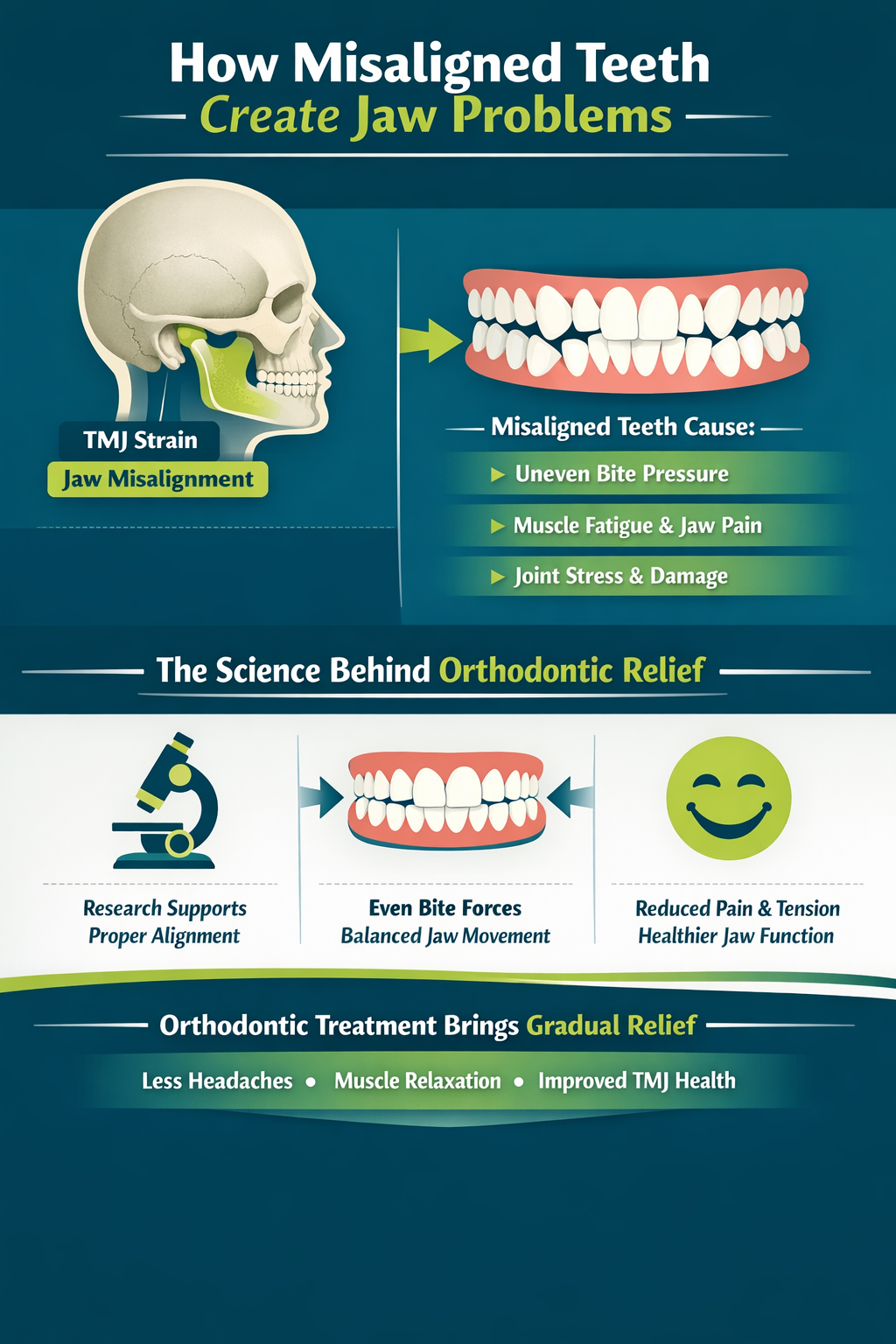
Your temporomandibular joint connects your lower jaw to your skull and works in coordination with your teeth during daily functions. When teeth occupy incorrect positions, your jaw compensates for the imbalance with each bite, conversation, and swallow. This constant adjustment forces jaw muscles to work harder than they should, placing excessive stress on the joint.
Malocclusion creates uneven bite forces, with some teeth contacting more forcefully than others. Your body attempts to stabilize this imbalance by forcing muscles into overdrive, as if you were lifting weights without rest periods. What begins as mild soreness can, over time, develop into chronic muscle fatigue and joint damage.
The Science Behind Orthodontic Relief
Research published by the National Institutes of Health confirms that bite alignment significantly influences temporomandibular disorders, making orthodontic correction a viable treatment approach for many patients experiencing jaw pain. Proper tooth alignment allows your jaw to close naturally without forcing muscles into compensatory positions. When teeth fit together correctly, bite forces distribute evenly across all contact points rather than concentrating on isolated teeth.
The relief happens gradually as teeth move into their correct positions throughout treatment. Your jaw muscles no longer need to compensate for poor alignment, allowing them to relax into healthier patterns. Many patients notice improvements in headaches, facial tension, and clicking as treatment progresses toward completion.
Traditional Braces for Correcting Bite Problems
Traditional braces use brackets and wires to move teeth with precise control over positioning. The constant, measured pressure guides teeth into optimal positions for proper bite function. This method works particularly well for complex alignment issues where teeth need significant repositioning to achieve results.
Braces offer distinct advantages for treating jaw pain caused by misalignment. The fixed nature of brackets allows us to make precise adjustments during regular visits, ensuring teeth move according to the treatment plan. This precision proves valuable when correcting severe malocclusions contributing significantly to TMJ symptoms. Continuous force application helps achieve the stable bite needed for lasting relief from discomfort.
Treatment with braces requires regular adjustment appointments, during which we tighten wires and monitor your progress toward your goals. While they remain visible throughout treatment, their effectiveness for complex cases makes them a strong option for addressing jaw pain at its source rather than simply managing symptoms.
Clear Aligners as an Alternative Approach
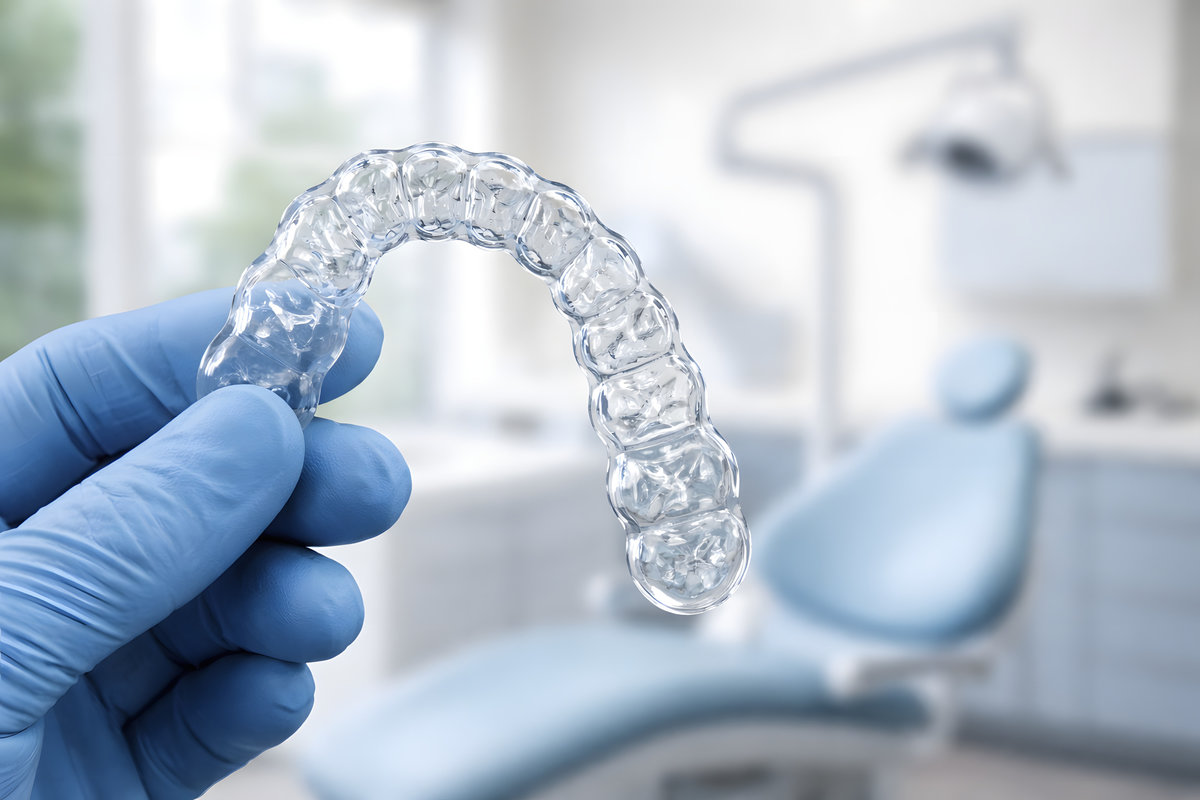
Clear aligners provide a discreet alternative to traditional braces for appropriate candidates. These removable trays apply gentle, consistent pressure to gradually shift teeth into better positions. Each set of aligners moves teeth slightly, progressing through a planned sequence until achieving the desired alignment for proper bite function.
Invisalign works well for mild to moderate bite issues contributing to jaw pain. The aligners allow you to maintain your normal diet and oral hygiene routine by removing them for eating and brushing. Many patients appreciate the aesthetic benefits and flexibility these clear trays provide during treatment.
Gradual tooth movement helps reduce grinding and clenching behaviors that often accompany bite problems. As your teeth become better aligned, your jaw experiences less stress during rest and function. However, more complex bite problems may require the stronger forces traditional braces provide for optimal correction.
Choosing the Right Treatment for Your Jaw Pain
The best approach depends on the cause of your specific jaw pain. We conduct thorough evaluations to identify the alignment issues contributing to your discomfort. Our examination assesses your bite, evaluates jaw function, and determines whether orthodontic treatment alone will address your symptoms or if additional therapies might benefit you.
Some patients benefit from combining orthodontics with other therapies during treatment. A custom night guard may protect teeth while orthodontic treatment progresses toward completion. Physical therapy exercises can help retrain jaw muscles into healthier patterns. We coordinate these approaches to provide comprehensive care addressing all aspects of your condition for optimal results.
Not every case of jaw pain stems solely from misaligned teeth. If arthritis, trauma, or stress contributes to your symptoms, orthodontics may serve as one component of a broader treatment strategy rather than a standalone solution to your discomfort.
Find Relief at Drs. Chin & Pharar Dentistry
Living with chronic jaw pain affects your daily quality of life in ways others might not fully understand. We provide thorough evaluations to determine whether orthodontic treatment can relieve your discomfort by addressing underlying bite problems. Our training in treating complex dental conditions allows us to recommend treatments targeting the root causes of your jaw pain rather than merely managing symptoms.
If you are ready to explore how orthodontic treatment might help you achieve lasting relief, contact our office to schedule a consultation today.