
 You went through surgery expecting relief, and instead, your jaw pain is worse than before. This is more common than most patients realize, and it does not mean your recovery is hopeless.
At Drs. Chin & Pharar Dentistry in Las Vegas, we work with patients navigating complex jaw cases, including those who have already had surgery and are still struggling. Dr. Robert Chin and Dr. Jessica Pharar take a thorough, patient-centered approach to TMJ treatment and are familiar with the factors that cause symptoms to linger or intensify after a procedure.
Why TMJ Pain Can Worsen After Surgery
Post-surgical TMJ flare-ups are not random. There are several well-documented reasons why the joint may become more painful or dysfunctional after an operation, and understanding them is the first step toward finding a real solution.
The Joint Was Already Under Stress Before Surgery
One of the most significant contributors to post-surgical worsening is pre-existing disc displacement or joint instability. If the underlying TMJ dysfunction was not fully addressed as part of the surgical plan, the joint may have been put under increased load during recovery. According to the Mayo Clinic, TMJ disorders involve a range of interconnected structures, including muscles, the disc, and the surrounding bone, meaning that treating one component without accounting for the others can leave the system unbalanced.
Changes to Bite Alignment and Condylar Position
Orthognathic surgery, jaw realignment, and other corrective procedures alter the physical relationship between the upper and lower jaw. When the condyle is repositioned, but the bite is not perfectly balanced afterward, the joint absorbs uneven force with every chew and clench. This mechanical imbalance can lead to new inflammation, clicking, limited range of motion, or pain that was not present at the same intensity before.
Bruxism and Parafunctional Habits
Stress-related habits like grinding and clenching are common in patients with underlying dental and jaw concerns. Surgery does not eliminate these behaviors, and in many cases, post-operative anxiety and discomfort can intensify them. When those forces are applied to a joint that is already healing, recovery becomes much harder. Exploring how bruxism connects to TMJ disorder is an important part of managing symptoms that outlast a surgical procedure.
What You Can Do If Your TMJ Is Still Getting Worse
Worsening symptoms after surgery usually mean the joint needs another look, not just more time to heal. Getting a second opinion can be a smart next step, especially if your provider has not checked your bite, disc position, or jaw muscle function since the procedure.
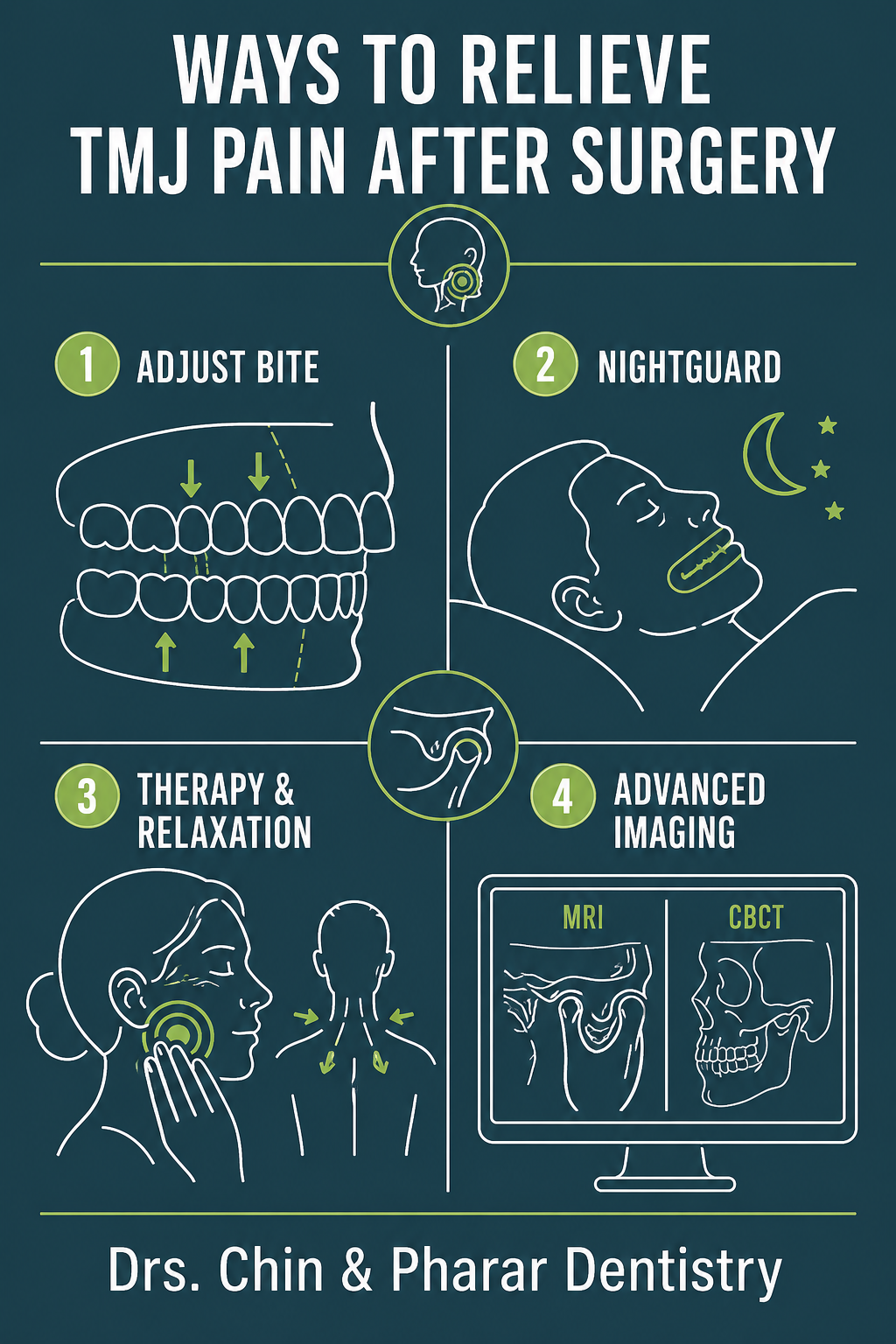
Treatment options vary depending on the root cause of the ongoing symptoms. These may include:
- Occlusal adjustment: reshaping specific teeth to distribute bite force more evenly across the joint
- Nightguard therapy: a custom-fitted nightguard worn during sleep to protect the joint from grinding forces and reduce inflammation
- Physical therapy and muscle relaxation protocols: targeted exercises that retrain the jaw muscles and reduce tension in the surrounding tissue
- Additional imaging: updated MRI or cone-beam CT imaging to assess the current disc position and condylar health
Pursuing these options early gives your joint the best chance of stabilizing before symptoms become more severe or harder to manage. Do not put this off simply because you have already gone through a surgical procedure. The connection between jaw health and your overall well-being makes addressing this promptly worth it.
Seek a Second Opinion from Drs. Chin & Pharar Dentistry in Las Vegas
If your TMJ symptoms have returned or worsened after surgery, you deserve a thorough evaluation from a team that approaches complex cases with precision and care. Dr. Robert Chin completed a General Practice Residency at the University of Rochester Medical Center’s Eastman Institute for Oral Health, where he received advanced training in managing medically complex patients. Dr. Jessica Pharar has conducted research on dental lasers and oral health at UC Irvine, and she brings the same commitment to evidence-based, patient-focused treatment. Together, they work alongside patients to find long-term solutions rather than temporary fixes.
We believe no one should have to live with unresolved jaw pain after already going through surgery. If you are ready to take the next step and get real answers, reach out to our team through our contact form to schedule your consultation.