

The pressure your jaw generates while grinding teeth can exceed 250 pounds per square inch. When this tremendous force repeatedly acts on your teeth over time, it creates structural weaknesses beyond what normal chewing produces. Teeth grinding damages more than just the visible enamel surface; it compromises the entire structural integrity of teeth and creates vulnerabilities for serious infections.
Drs. Robert Chin and Jessica Pharar at Drs. Chin & Pharar Dentistry understand how bruxism progressively threatens oral health. Dr. Chin completed his General Practice Residency at the University of Rochester Medical Center, Eastman Institute for Oral Health, while Dr. Pharar trained through the Advanced Education in General Dentistry Program at Texas A&M, Baylor College of Dentistry. We’ve treated numerous patients suffering from the severe complications arising from untreated teeth grinding, including complex fractures and infections requiring urgent intervention.
How Teeth Grinding Creates Fractures
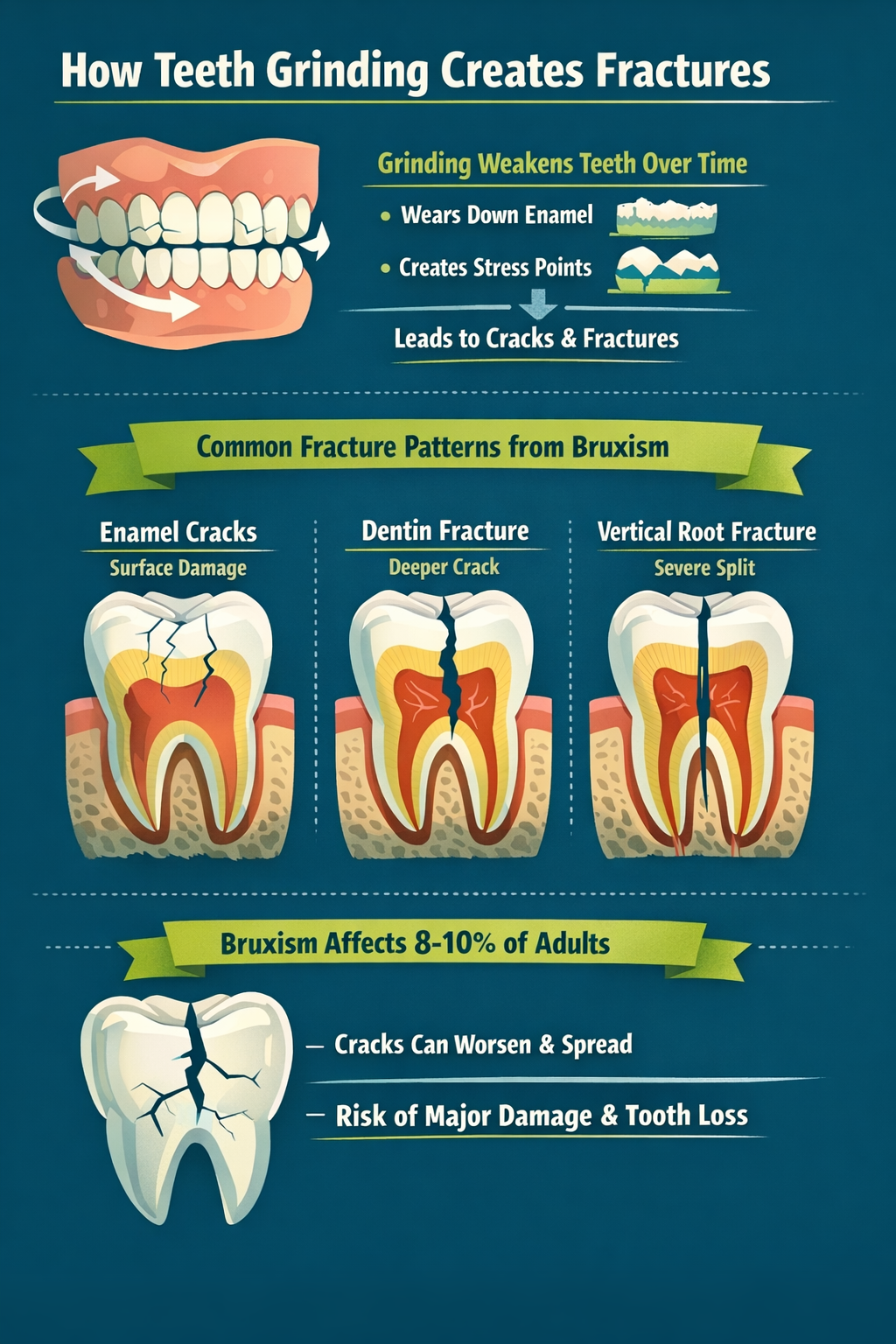
Tooth enamel is remarkably strong under normal conditions. However, the rhythmic contractions of the masseter muscles during grinding episodes place abnormal stress on this protective layer. Each grinding session wears down microscopic amounts of enamel, gradually exposing the softer dentin underneath.
The damage pattern from bruxism differs significantly from normal wear. Rather than uniform surface changes, grinding creates weak points and stress lines throughout the tooth structure. These compromised areas become prime locations for fractures, particularly along existing fillings or at the tooth edges where enamel is thinnest.
Common Fracture Patterns From Bruxism
Sleep bruxism affects 8% to 10% of adults, creating distinct damage patterns. The cracks may start small and invisible to the naked eye, but they propagate deeper with continued grinding pressure. Some fractures remain superficial, affecting only the enamel layer. Others extend into the dentin or reach the pulp chamber, where nerves and blood vessels reside.
Vertical fractures prove particularly problematic. These cracks run from the chewing surface toward the root, splitting the tooth lengthwise. The constant grinding motion acts like a wedge, slowly widening and deepening the crack. Without intervention, the fracture can extend below the gum line, rendering the tooth unsalvageable.
The Connection Between Fractures and Infections
A fractured tooth creates an entry point for bacteria. Your mouth contains hundreds of bacterial species, most harmless when contained outside the tooth structure. Once a crack forms, bacteria can migrate through the opening into the dentin tubules and eventually reach the pulp chamber.
The pulp contains nerves and blood vessels essential for tooth vitality. When bacteria infiltrate this space, they trigger an infection called pulpitis. The immune response triggers inflammation within the rigid confines of the pulp chamber, leading to intense pressure and pain. As the infection progresses, the tissue becomes necrotic and dies.
When Infections Spread Beyond the Tooth
An untreated dental infection doesn’t remain localized. The bacteria multiply and spread into surrounding tissues, forming an abscess. This pocket of pus can develop at the tooth root or in the surrounding gum tissue. The infection may spread to your jawbone, causing osteomyelitis.
More seriously, dental infections can become systemic. Bacteria from your mouth can enter your bloodstream through the infected tissue, potentially causing sepsis. This life-threatening condition requires immediate medical intervention. Facial swelling from dental infections can also compromise your airway, creating a medical emergency that may require hospitalization.
Additional Complications From Untreated Bruxism
Beyond fractures and infections, chronic teeth grinding creates a cascade of dental problems. Constant pressure can damage dental restorations, including fillings, crowns, and veneers. Implants and bridges can fail under the excessive forces generated during grinding episodes.
Severe wear exposes the dentin layer, causing temperature sensitivity and discomfort. The loss of vertical dimension from tooth wear affects your bite alignment. This altered relationship between the upper and lower teeth can trigger temporomandibular joint problems, leading to jaw pain, clicking, and restricted mouth opening.
Recognizing the Warning Signs
Morning jaw soreness often signals nocturnal grinding. Your jaw muscles feel fatigued or tender when you wake, similar to the feeling after intense exercise. You might notice flattened tooth surfaces or increased tooth sensitivity to hot and cold temperatures.
Some people develop temporal headaches or facial pain. Teeth may appear shorter than before, or you might notice chips along the biting edges. If you have a bed partner, they may report hearing grinding sounds during the night. These symptoms warrant immediate dental evaluation before fractures or infections develop.
Treatment Approaches at Drs. Chin & Pharar Dentistry
Dr. Chin and Dr. Pharar begin with a thorough evaluation to assess the extent of bruxism damage. We examine teeth for wear patterns, fractures, and early signs of infection. Digital radiographs reveal damage not visible during clinical examination, including cracks extending into tooth roots or bone loss around affected teeth.
For existing fractures, treatment depends on severity and location. Minor cracks may require dental bonding or protective crowns. Deeper fractures extending into the pulp necessitate root canal therapy to remove infected tissue and preserve the tooth. Fractures extending below the gum line often require extraction to prevent continued infection.
Custom Protection With Night Guards
Night guards provide essential protection for healthy teeth. These custom-fitted appliances create a barrier between upper and lower teeth, absorbing the grinding forces. Dr. Pharar and Dr. Chin use advanced digital scanning technology to create precisely fitted guards that maximize both comfort and protection. According to the National Institute of Dental and Craniofacial Research, custom-made mouthguards from dentists offer effective protection against tooth damage from bruxism while helping patients manage symptoms like jaw pain and headaches.
Don’t Put This Off at Drs. Chin & Pharar Dentistry
Teeth grinding progressively damages your dental health. What begins as minor enamel wear escalates into fractured teeth and serious infections when left untreated. The consequences extend beyond your oral cavity, potentially affecting your overall health through systemic infections or complications requiring hospitalization.
We offer comprehensive evaluation and treatment for bruxism and its complications. Dr. Chin’s residency training at the University of Rochester Medical Center and Dr. Pharar’s advanced education at Texas A&M prepare us to manage complex dental cases, including severe infections and structural damage from grinding. Our experience treating cancer patients and medically complex individuals equips us to handle challenging situations. Schedule your evaluation to protect your teeth from further damage.