
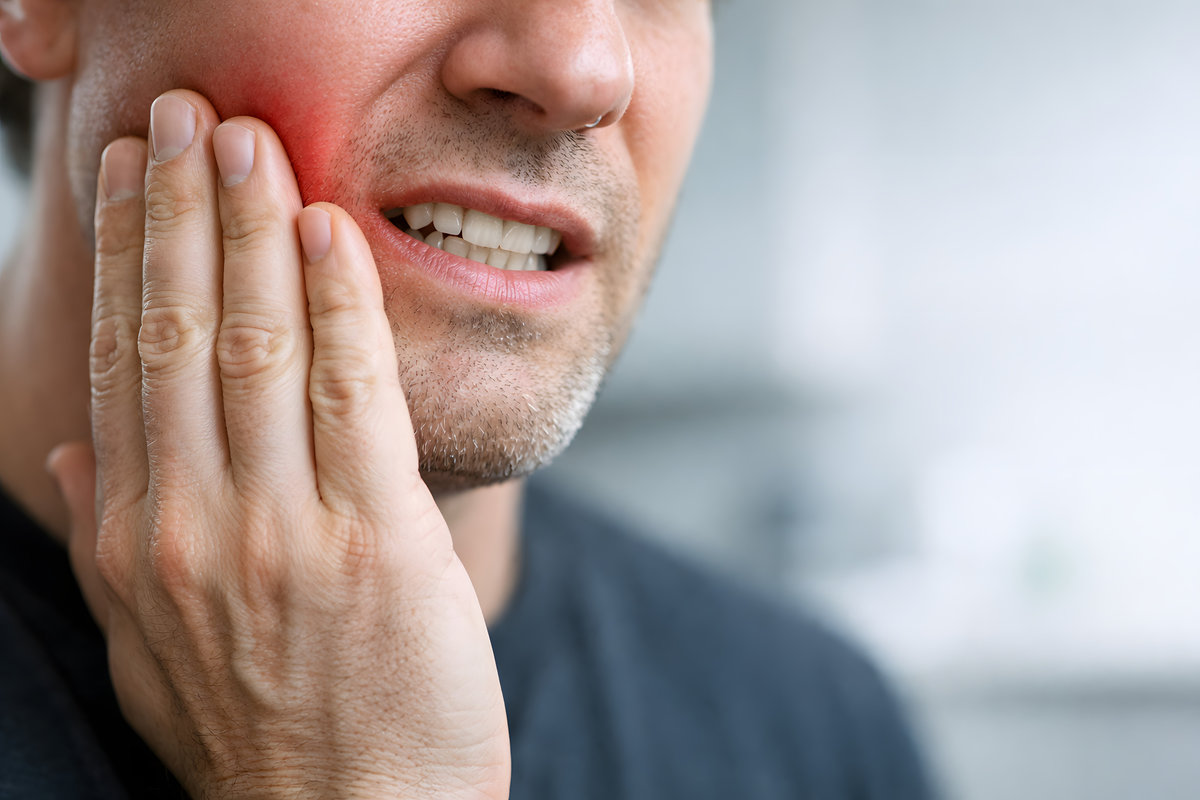
A small chip in your tooth from biting into something hard might seem like a minor inconvenience, but what starts as a barely visible crack can eventually lead to severe pain, infection, or even tooth loss. When a tooth sustains damage, the window for successful treatment begins closing immediately, with complications mounting as hours and days pass.
Dr. Robert Chin and Dr. Jessica Pharar at Drs. Chin & Pharar Dentistry understand the urgent nature of dental injuries. Both graduates of UNLV School of Dental Medicine, they bring advanced training and a compassionate approach to treating dental emergencies in Las Vegas. We handle everything from minor chips to complex trauma cases, and we provide same-day emergency appointments whenever possible.
What Defines Minor Dental Trauma
Minor dental trauma includes enamel cracks, small chips, soft tissue injuries inside the mouth, and slight tooth loosening. These injuries might not cause immediate severe pain, which often leads people to postpone treatment. A tooth can chip when eating hard foods, during sports, or in accidents at home.
The enamel may fracture without exposing the inner layers of the tooth, creating what appears to be a purely cosmetic issue. Soft tissue injuries like cuts to the gums, lips, or tongue often occur alongside tooth damage. A slightly loosened tooth might tighten back up on its own, but the trauma could have damaged the internal pulp or root structures.
Hidden Damage Beneath the Surface
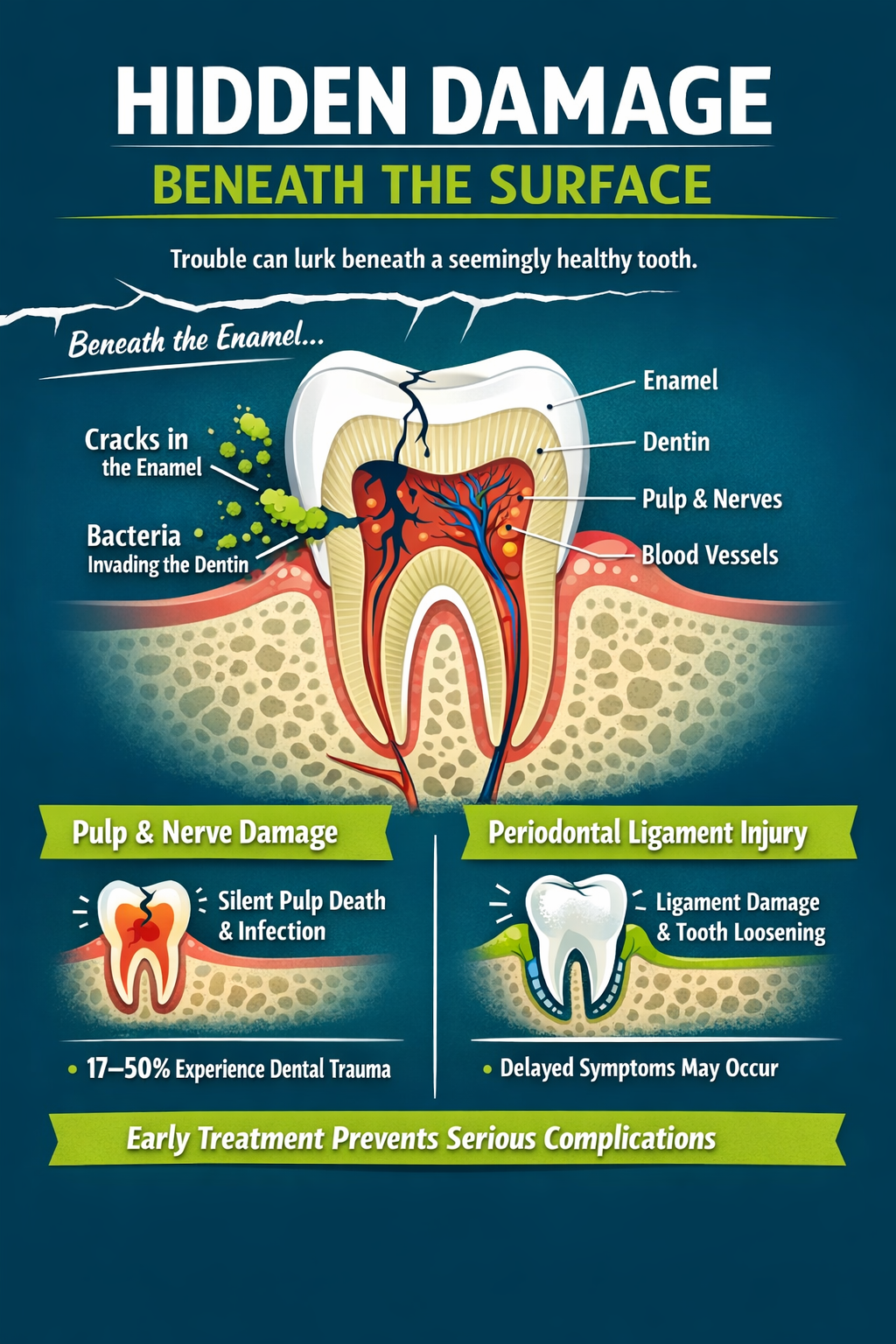
The visible damage to a tooth represents only part of the problem. Internal structures, including the pulp, nerves, and blood vessels, can sustain injury even when the tooth looks relatively intact. Cracks in the enamel create pathways for bacteria to reach the sensitive dentin layer beneath.
Pulp and Nerve Damage
Damage to the tooth’s pulp may not produce symptoms immediately. The pulp can slowly die over weeks or months following trauma, a process occurring silently until infection develops. Research shows that approximately 17–50% of adolescents and adults experience dental trauma during their lifetime, with many cases initially appearing minor.
Periodontal Ligament Injury
The periodontal ligament holding your tooth in the socket can also sustain damage during trauma. This ligament damage might not become apparent until the tooth begins loosening weeks later. Root canal treatment becomes necessary once infection reaches the pulp, a condition that can be avoided with prompt initial care.
Infection Development and Spread
Bacterial infections from untreated dental trauma follow predictable patterns. The infection begins at the trauma site, where damaged tissue and blood provide nutrients for bacterial growth. These bacteria produce acids and toxins as waste products, further breaking down tooth structure and surrounding tissues. An infected tooth can develop an abscess, a collection of pus forming at the root tip or in the surrounding bone.
Serious Systemic Complications
In rare but serious cases, dental infections spread to other areas of the head and neck. Ludwig’s angina, a potentially life-threatening infection, can develop when bacteria from an infected tooth spread to the floor of the mouth and neck. This condition causes difficulty breathing and swallowing, requiring emergency medical intervention.
Facial cellulitis, another complication of untreated dental infections, causes widespread swelling across the face and jaw. The infection can enter the bloodstream, leading to sepsis, a whole-body inflammatory response becoming life-threatening without immediate medical care. What began as a small chip or crack transforms into a medical emergency requiring hospitalization and intravenous antibiotics. Don’t put this off when the consequences include these serious health risks.
Structural Compromise and Tooth Loss
Even minor trauma weakens tooth structure in ways compounding over time. A small crack in the enamel acts like a fault line, concentrating stress during normal chewing and potentially expanding with each bite. The tooth becomes increasingly fragile, more susceptible to additional fractures, and less able to withstand the forces of daily use. Damaged teeth often develop increased sensitivity to temperature changes and pressure.
Long-Term Consequences
The loss of even a small amount of tooth structure affects bite alignment and jaw function. Adjacent teeth may shift toward the damaged area, creating spacing problems and bite abnormalities. These changes alter how teeth fit together, potentially leading to temporomandibular joint problems and requiring orthodontic correction.
Once a tooth is lost due to untreated trauma, the surrounding bone begins resorbing within months. This bone loss makes future dental implant placement more complicated and expensive. Adjacent teeth drift into the empty space, and the entire dental arch can shift. The cascade of problems from one lost tooth affects the entire mouth’s health and function.
Expert Emergency Dental Care at Drs. Chin & Pharar Dentistry
Don’t let minor dental trauma become a major health crisis. At Drs. Chin & Pharar Dentistry, we provide comprehensive emergency dental care using advanced technology and proven treatment protocols. Dr. Chin completed additional postdoctoral training through a General Practice Residency at the University of Rochester Medical Center’s Eastman Institute for Oral Health, which has advanced his skills in managing complex dental emergencies. Dr. Pharar brings her research background in oral cancer and dental lasers to our evidence-based approach to emergency care.
We understand dental emergencies don’t follow business hours. Our practice offers same-day appointments for urgent cases and maintains availability for true emergencies. We work with most major insurance providers, including Delta Dental, MetLife, and CIGNA to minimize your out-of-pocket costs. Contact us immediately if you’ve experienced any dental trauma, no matter how minor it seems, to receive prompt care that protects your long-term oral health.