

The early signs of oral cancer are easy to miss because they rarely feel like cancer. A white or red patch inside the cheek, a sore that will not heal after two weeks, unexplained numbness in the jaw or lips, and persistent throat discomfort are among the most common early indicators. They are also among the most dismissed. Each one has a more comfortable explanation readily available. That habit of waiting for something more alarming is exactly what allows oral cancer to reach an advanced stage in people who have had every opportunity to catch it early.
At Drs. Chin & Pharar Dentistry in Las Vegas, we built our oral cancer screenings around this reality. Dr. Jessica Pharar researched oral cancer and dental lasers during her undergraduate studies at UC Irvine, long before co-founding this practice. That background informs our approach to every screening. We are not just looking for obvious warning signs. We are looking for the subtle ones that patients have already dismissed.
The Symptoms That Are Easy to Explain Away
The earliest signs of oral cancer tend to mimic problems people already know how to rationalize. A white or red patch in the mouth may look like an irritation from a sharp piece of food or a rough tooth. A sore that does not heal gets chalked up to stress or a weakened immune system. Jaw stiffness and difficulty fully opening the mouth, a condition called trismus, are often misread as tension or a TMJ flare-up. Unexplained ear pain gets attributed to allergies or congestion. None of these explanations is unreasonable. The issue is that they delay the one step that actually matters.
According to the National Institute of Dental and Craniofacial Research, any sore, lump, white or red patch, or difficulty chewing and swallowing that persists beyond two weeks warrants a professional evaluation. That two-week threshold is the line between a reasonable wait and a risk. When these symptoms are fleeting and isolated, they are usually benign. When they keep coming back or simply do not resolve, they deserve more than a self-diagnosis.
The Warning Signs Most Often Written Off
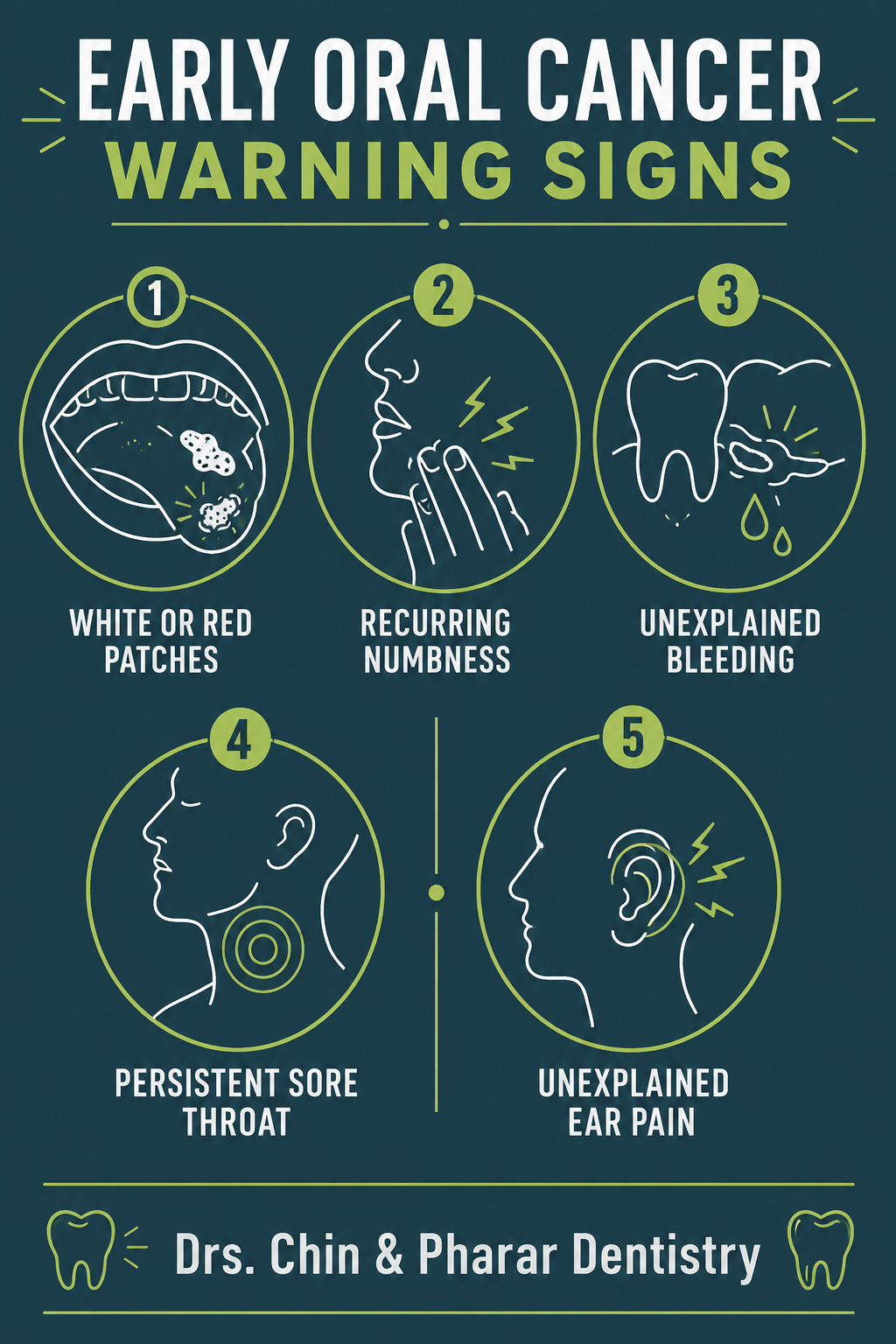
Some of the most commonly overlooked indicators of early oral cancer do not feel alarming in the moment. The following are the signs patients most frequently dismiss before a diagnosis:
- Persistent white or red patches: Called leukoplakia and erythroplakia, these patches are painless in early stages, which is precisely why they go unaddressed
- Unexplained numbness: Often attributed to a dental procedure, stress, or sleeping position, but recurring numbness in the lips, jaw, or tongue warrants attention
- Bleeding without a clear cause: Easy to blame on brushing too hard or sensitive gums, but recurring oral bleeding tied to a sore or lesion is a red flag
- A sore throat or sensation of something caught in the throat: Frequently mistaken for post-nasal drip, acid reflux, or a mild infection
- Unexplained ear pain: One of the most unexpected early signs, since the ear and oral cavity share nerve pathways
These symptoms do not announce themselves as emergencies. They arrive quietly, and without a professional eye, they can stay under the radar for months.
What Happens When the Window Closes
The difference between early and late-stage oral cancer is not just a matter of survival odds. It changes what treatment looks like entirely. Early detection often means less invasive intervention and a more complete recovery. Late-stage oral cancer can require extensive surgery with lasting effects on a person’s ability to speak, eat, and swallow. For patients already navigating complex health conditions, this is especially true.
Our dental care for cancer patients is built around minimizing those compounding risks, and it starts with catching problems before they compound at all. Consistent preventive dental care is the most reliable tool we have for doing exactly that.
Oral Cancer Screenings in Las Vegas at Drs. Chin & Pharar Dentistry
A dental visit is still the most effective way to catch what a bathroom mirror cannot show you. Our team is trained to spot changes in your oral tissue that fall well outside what most patients would recognize as concerning. That kind of trained attention, combined with Dr. Pharar’s clinical background in oral cancer research, has always been the foundation of our approach to early detection. Any irritation, sore spot, lump, or unusual change that lasts more than two weeks deserves a closer look.
You do not need to wait until something feels serious to ask for an answer. Our team can evaluate the area, explain what we see, and help you understand the next step. Request an appointment today for a routine exam, an oral cancer screening, or a closer look at something that has been on your mind.