
 If you are an athlete living with persistent jaw pain, chronic headaches, or a clicking jaw that you keep brushing off as minor annoyances, those symptoms may be doing far more damage to your performance and your long-term health than you realize. Untreated TMJ disorder does not stay contained to your jaw. For athletes, including dancers and gymnasts, the downstream effects can be serious enough to force time off, limit their competitive window, or permanently alter the way they move and function.
At Drs. Chin & Pharar Dentistry in Las Vegas, we see athletes who have spent months or years trying to push through the discomfort. Our team offers TMJ treatment designed to address the root cause of your disorder, not just manage the symptoms. Drs. Robert Chin and Jessica Pharar bring a thorough, patient-centered approach to each case, and they understand how much is at stake when your livelihood or passion is tied to your physical performance.
What TMJ Disorder Actually Does to an Athlete’s Body
TMJ disorder, or temporomandibular joint disorder, affects the joint that connects your lower jaw to your skull. When that joint becomes stressed, inflamed, or misaligned, the effects can reach well beyond your mouth. For athletes, this is especially important because the jaw absorbs a surprising amount of pressure during intense physical activity. Clenching during a workout or competition, taking contact in a sport, or grinding your teeth at night from stress can all place extra strain on the joint and worsen symptoms over time.
The Performance Costs You May Not Be Connecting
Pain and dysfunction in the TMJ rarely stay local. Many athletes report symptoms that seem unrelated to their jaw but are actually direct results of the disorder.
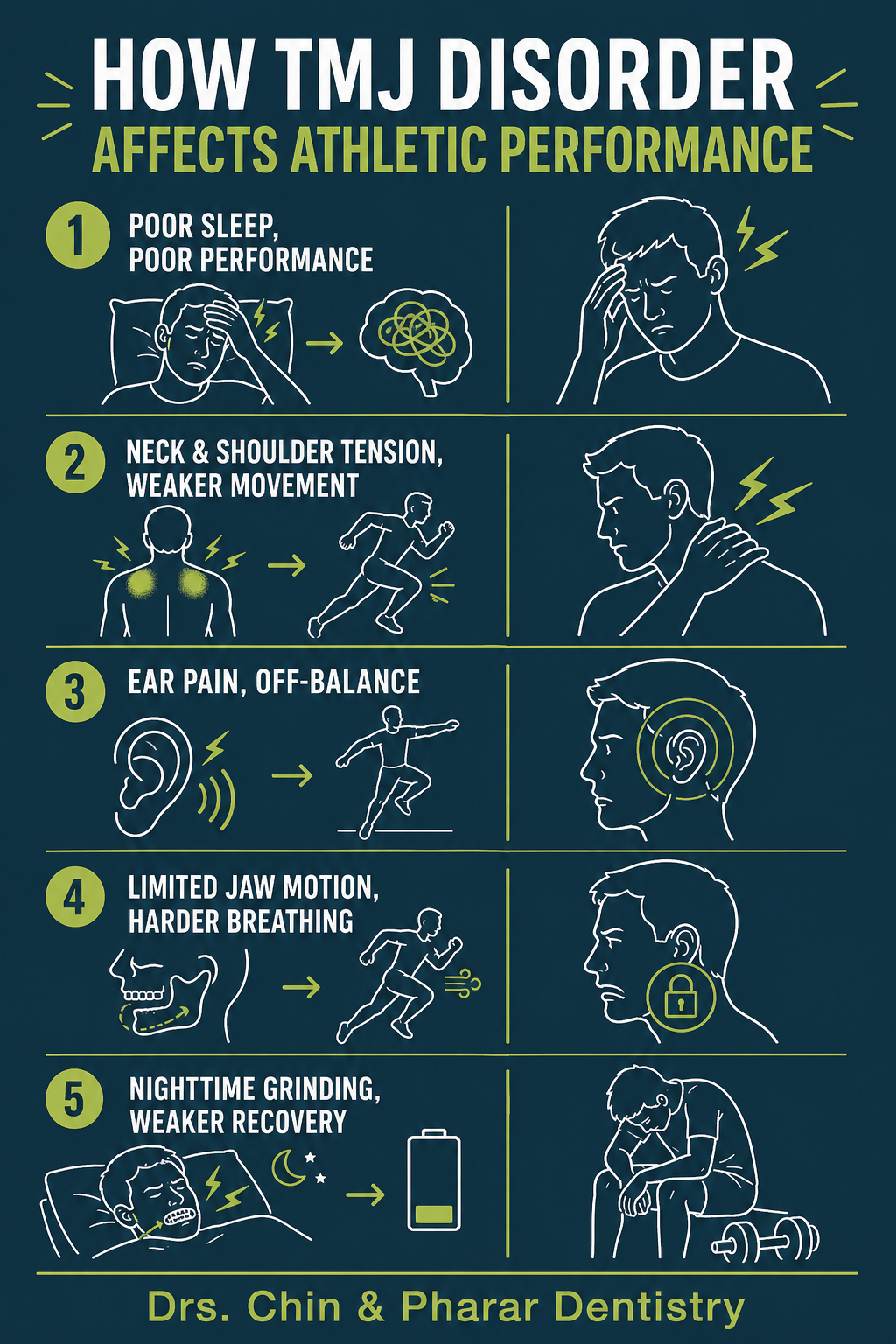
Here are some of the ways TMJ disorder affects athletic performance:
- Headaches: persistent pain in the temples or behind the eyes that disrupts sleep, focus, and recovery
- Neck and shoulder tension: muscle compensation from the jaw can radiate downward, affecting mobility and strength
- Ear pain and pressure: inner ear symptoms can throw off balance and spatial orientation
- Limited jaw range of motion: difficulty opening the mouth fully interferes with breathing patterns during high-output activity
- Sleep disruption: grinding and clenching at night impairs the deep sleep athletes need for recovery and adaptation
These symptoms compound over time. A research review published in PubMed found that competitive athletes suffer from temporomandibular dysfunction more frequently than non-athletes, and that the physical and psychological stress of athletic performance is itself a contributing factor to the disorder.
Why Athletes Wait Too Long
Part of what makes TMJ disorder so risky for athletes is the culture of pushing through discomfort. Many athletes chalk up jaw pain, clicking, and tension headaches to general fatigue or training stress. Because the symptoms can wax and wane, it feels manageable right up until it is not. By the time a serious athlete seeks treatment, the joint may have experienced months of compounding wear. Cartilage deterioration, disk displacement, and chronic muscle inflammation do not resolve on their own.
What Happens When TMJ Disorder Goes Untreated
The progression of untreated TMJ disorder is not subtle. Inflammation in the joint can lead to structural changes that become increasingly difficult to reverse. For athletes, this creates a real risk. If the joint degrades to the point where jaw movement becomes painful and restricted, it affects breathing, stability, and focus during competition. Severe cases can require surgical intervention, and the recovery timelines associated with TMJ surgery are long.
Beyond the joint itself, the chronic pain associated with untreated TMJ disorder takes a measurable toll on the nervous system. Athletes dealing with daily pain show elevated cortisol levels, reduced sleep quality, and impaired reaction time. None of those factors is compatible with high-level performance. Protecting your teeth with a custom sports mouthguard is one line of defense, but it does not replace a full treatment plan for an active TMJ disorder.
How TMJ Treatment Can Protect Your Career
Getting ahead of this disorder means stopping the damage before it becomes structural. Treatment typically begins with a thorough evaluation of how your jaw moves, where the dysfunction originates, and how your bite contributes to stress on the joint. Custom oral appliances, often called night guards, are a common frontline approach. These devices reposition the jaw during sleep to reduce clenching, relieve muscle tension, and allow the joint to recover. For athletes who grind heavily under competitive stress, this intervention alone can produce significant relief.
In cases where anxiety or dental fear has been a barrier to seeking care, it is worth knowing that we offer sedation dentistry to make the evaluation and treatment process comfortable. Our team takes the time to explain findings clearly and map out a realistic path forward, because making an informed decision about your care should never feel rushed. For athletes with a more complex picture, such as a history of jaw injury, bruxism alongside TMJ disorder, or bite irregularities that contribute to joint stress, we develop a customized plan that accounts for all of those factors.
Get TMJ Treatment at Drs. Chin & Pharar Dentistry
TMJ disorder is not the kind of problem that rewards patience. The longer the joint endures unaddressed stress, the narrower your treatment options become, and the longer your recovery will take. If you are an athlete noticing persistent jaw pain, morning headaches, neck stiffness, or a jaw that clicks and locks, the time to act is now, not after your next season or your next tournament.
Drs. Chin and Pharar graduated from the UNLV School of Dental Medicine and bring advanced post-doctoral training and a genuine commitment to patient education to every appointment. Dr. Chin completed a General Practice Residency at the University of Rochester Medical Center’s Eastman Institute for Oral Health, and Dr. Pharar conducted research in oral cancer and dental lasers while at UC Irvine. Contact our office today to schedule a consultation and get answers about what TMJ treatment can do for your performance and your health.